

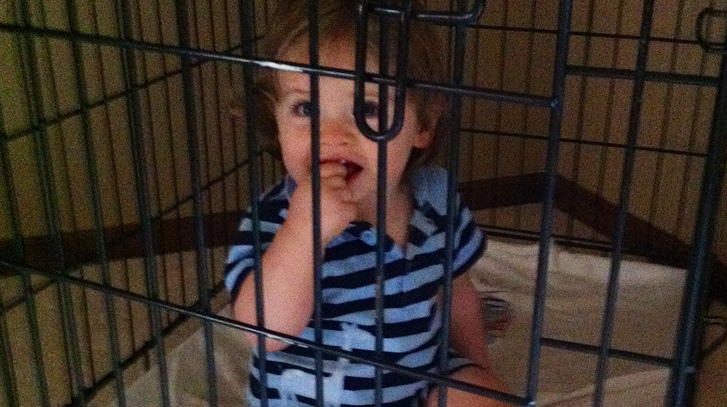

Morrison McConnell has spent the first three months of his life behind razor wire and metal bars. His mother, Sandra, is serving a prison sentence and gave birth to her son while incarcerated. Morrison is one of around 80 babies currently housed with their mothers in prison, according to a new investigation by the Independent. Over 17,000 more children are separated from mothers who are in jail.
In a week long special the Independent is exploring the dramatic rise in the number of women in prison, and the impact this increase has had on their families.
The numbers speak for themselves: the number of women in prison in England has more than doubled over the past 15 years, with over over 4,000 women currently incarcerated in prisons in England. 10,181 women were jailed last year alone, but many serve relatively short sentences.
There are more women serving time in England than anywhere else in the European Union.
Childcare behind bars
For women with very young children, or those that are pregnant when sent down, this raises some serious issues about childcare.
Prisons have had to respond to the growing number of incarcerated mothers by developing their facilities. Eight of the UK’s women’s prisons now have mother and baby units meaning around 80 babies are housed with their mothers. Eastwood Park, is such unit. The prison centre houses a small play area, a nursery and a TV lounge. The atmosphere is much more welcoming than a standard prison block and mothers and children sleep in unlocked rooms rather than cells.
Places are allocated to mothers who have left young children outside prison and those who give birth during their sentence and are highly sought after.
One young mother told the Independent, ‘It’s hard to get into this unit. When I first came to Eastwood Park they made clear on the juvenile wing that my behaviour had to be spotless if I wanted to get a place here. That meant not getting into arguments with anyone, which is hard when you are cooped up with a load of other women in such a small space. You can see that from watching Big Brother. People fall out about anything.’
Separation
Most children, however, are separated from their mothers during their period in incarceration.
Over 9,000 children in England and Wales are taken in by family members of friends, with grandmothers being the most common surrogate carers. Another 2,000 children are adopted or fostered because their mother is imprisoned.
Only 9 per cent of children whose mothers are jailed are cared for by their fathers.
Repercussions
It appears men and women deal with the psychological pressures of prison differently. In 2010 47 per cent of all incidents of self harm were committed by women, despite women making up just 5 per cent of the prison population.
Meanwhile the effects on the emotional state of children are also worrying. According to theIndependent, a child with a parent in prison is three times more likely to exhibit anti-social behaviour. Of concern is the claim that 65 per cent of boys with a parent in prison will eventually commit a crime themselves.
Nature of the offenses
The Independent’s investigation focuses, so far at least, on the effects rather than the reasons behind the burgeoning numbers of incarcerated women. They do point out that off all the women given prison sentences in 2011, more than a third were jailed for ‘theft or handling stolen goods, or other low-level “nuisance” offending’. Many were first time offenses, with a quarter having had no previous convictions.
This is an important and brave commission. Covering this subject matter in such a detail is admirable. The Bureau looks forward to more of the same.
This story was originally published by the Bureau of Investigative Journalism.