

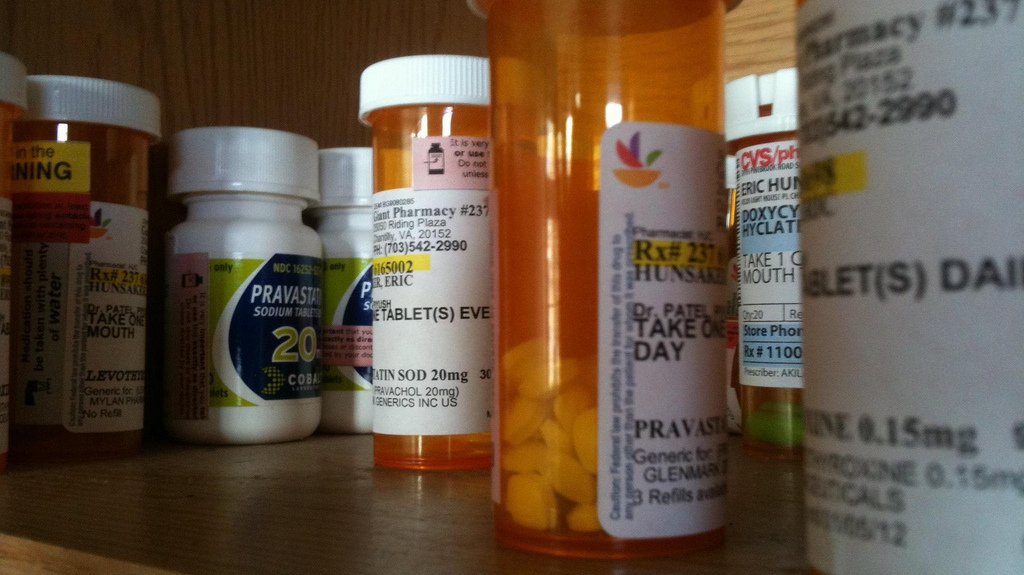

(MintPress) – Addictions to prescription medications rose 70 percent from 2001-2009 in the U.S., according to a recent study published in the Archives of Internal Medicine. U.S. addictions to prescription drugs, especially painkillers, have spiked in recent years, a trend that highlights the misdirected “war on drug,” and a failure to properly regulate the widespread abuse of legally obtained prescription medications.
Now, lawmakers and common citizens are realizing that the war on drugs, a $12 billion per year expenditure by U.S. taxpayers, is wasteful and does little to curb rampant drug addiction, a problem more Americans recognize as an illness rather than a crime.
The study
The data from the latest report was compiled from two national surveys examining doctor visits and the reasons patients seek treatment. During the early years of the survey, 2001-2003, approximately 10.3 million people visited doctors to receive treatment for addiction to prescription medication.
This number increased sharply from 2007-2009 when 18 million people sought treatment for the same condition. “This finding is consistent with trends in substance use disorder-related utilization at the nation’s community health centers and emergency departments and, sadly, use of its morgues,” write the authors of the study in Archives of Internal Medicine, a national medical journal.
The problem of prescription drug abuse has become so acute that of the 36,450 overdose deaths in the United States in 2008, 20,044 involved a prescription drug, more than all fatalities from illicit drugs combined.
Over prescribing meds
Part of the epidemic stems from the fact that doctors are simply prescribing more medications to treat illnesses than ever before. The greatest difference in American medicine since the 1970s, writes Guardian contributor Cory Franklin, “is the increase in the number of medications prescribed to patients today.”
The average American takes 12 medications a year, up from an average of 7 medications just 20 years ago. Similarly, U.S. spending on medications constituted approximately 5 percent of healthcare costs in the 1970s. Today, more than 10 percent of health care spending is directed toward prescription medications.
Although the increase is largely due to improvements in medications that in some cases allow a patient to avoid a more costly course of treatment, many recognize this spike in medications as driven by the for-profit pharmaceutical industry.
However, the larger problem, a problem that more legislators recognize as the source of America’s addiction woes, is the overall punitive approach the U.S. justice system has when approaching drug addiction. The American Civil Liberties Union (ACLU) has joined other rights organizations advocating for systemic reform and a new approach to how U.S. courts prosecute addiction as a crime.
“Although medical professionals recognize that drug addiction is a chronic disease, the first stop for the addicted is often the criminal justice system. Because our drug policies emphasize a punitive rather than rehabilitative response to substance abuse and addiction, they fail to address the actual cause of the illness, which only exacerbates the disease and results in relapse and recidivism,” writes Rebecca McCray of the ACLU Criminal Reform Project.
The failed drug war
Prosecuting addicts as criminals rather than patients grew out of the war on drugs declared by President Ronald Reagan during the 1980s. Although the rise of crack cocaine and other street drugs had a devastating effect on inner city communities, the war to eradicate an illness has failed to reduce drug consumption. In fact, according to the 2010 National Survey on Drug Use and Health, approximately 22 million Americans consistently use illegal drugs, around 9 percent of the population.
Stiff drug sentencing has failed to produce the deterrent effect that policymakers are looking for. In fact, the troubling increases have led some to debate once unthinkable topics, including legalization of controlled substances, especially for relatively harmless street drugs like marijuana.
National approval for marijuana legalization reached an all time high last year. According to a national Gallup opinion poll, half of all Americans favor legalizing marijuana for adult recreational use. This election season, voters in Colorado and Washington have the chance to legalize marijuana through ballot initiative in next month’s vote.
Many believe that legalizing marijuana and the allocation of more federal money for patient rehabilitation will help to end the “war on drugs.” This policy, once considered unthinkable by mainstream political leaders, has now garnered extensive support, including from many current and former law enforcement officers.
Morris Panner, a former counter-narcotics prosecutor at the American Embassy in Colombia, comments on the need for a shift and policy in a reallocation of resources, saying, “The policies the United States has had for the last 41 years have become irrelevant.”
Panner continues, adding, “The United States was worried about shipments of cocaine and heroin for years, but whether those policies worked or not doesn’t matter because they are now worried about Americans using prescription drugs.”
Even more conservative lawmakers who once supported tough on drugs policies recognize that the war on drugs pushed by many political leaders in the 1980s have failed. Gov. Chris Christie (R-N.J.) has called drug policies “a failure” that imprisons people who really need treatment.
While 60,000 have died in the drug war over the past two decades, neither Mitt Romney nor Barack Obama addressed the issue during the three presidential debates this election season.
However, the issue was widely debated during the third party presidential debates in Chicago, Ill. Tuesday. Rocky Anderson, the Justice Party nominee, expressed his support for legalization, saying, “The war on drugs has been catastrophic for our country We don’t just need to legalize marijuana, we need to end drug prohibition just like we ended alcohol prohibition and treat drug use and abuse as a public health and education issue.”