

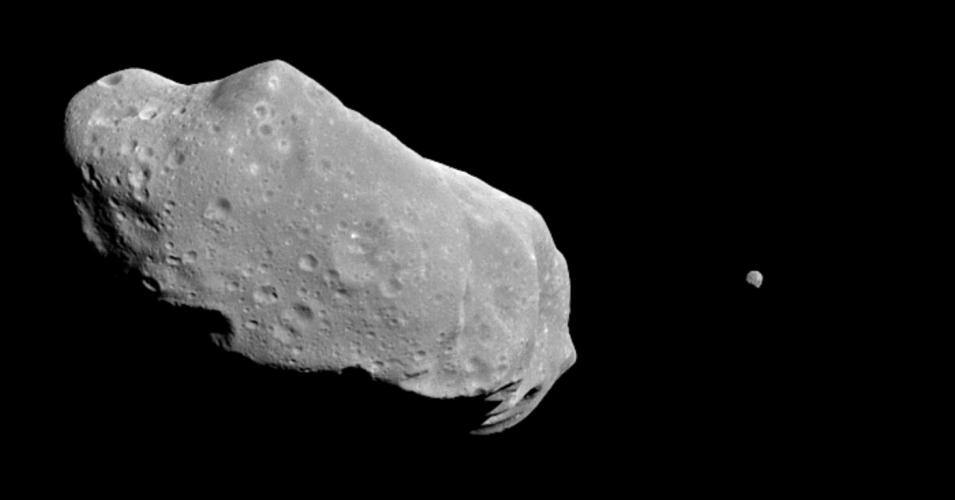
In a bipartisan bid to encourage commercial exploitation of outer space, the U.S. Senate this week unanimously passed the Space Act of 2015, which grants U.S. citizens or corporations the right to legally claim non-living natural resources—including water and minerals—mined in the final frontier.
The legislation—described by IGN‘s Jenna Pitcher as “a celestial ‘Finders Keepers’ law”—could be a direct affront to an international treaty that bars nations from owning property in space. The bill will now be sent back to the House of Representatives, which is expected to approve the changes, and then on to President Barack Obama for his anticipated signature.
Pitcher continued:
The new Space Act allows ventures to keep and sell any natural resources mined on planets, asteroids and other celestial bodies. Commercial operations could reap trillions of dollars from mining precious metals like platinum, common metallic elements such as iron, and water, the “oil of space.”
The vote was celebrated by the Google-backed “asteroid mining company” Planetary Resources, which lobbied hard for the legislation and says “the market in space is ripe to bloom.”
Planetary Resources president and chief engineer Chris Lewicki added: “Throughout history, governments have spurred growth in new frontiers by instituting sensible legislation. Long ago, The Homestead Act of 1862 advocated for the search for gold and timber, and today, H.R. 2262 fuels a new economy that will open many avenues for the continual growth and prosperity of humanity.”
“This off-planet economy,” he said, “will forever change our lives for the better here on Earth.”
But there could be a snag. Along with Britain, France, and Russia, the U.S. is a signatory to the 1967 Outer Space Treaty, which reads in part: “Outer space, including the moon and other celestial bodies, is not subject to national appropriation by claim of sovereignty, by means of use or occupation, or by any other means.”
As Wired noted on Thursday, “[h]anding out the right to exploit chunks of space to your citizens sounds very much like a claim of sovereignty, despite the Space Act’s direct statement that ‘the United States does not thereby assert sovereignty or sovereign or exclusive rights or jurisdiction over, or the ownership of, any celestial body’.”
“[O]n the one hand Congress is saying to these companies, ‘Go get these rights and we’ll defend you,’ and at the same time saying, ‘We’re making no sovereign claim of ownership’,” space lawyer Michael Listner told the Guardian.
“They’re trying to dance around the issue,” he said of U.S. lawmakers. “I tend to think it doesn’t create any rights because it conflicts with international law. The bottom line is before you can give somebody the right to harvest a resource you have to have ownership.”