

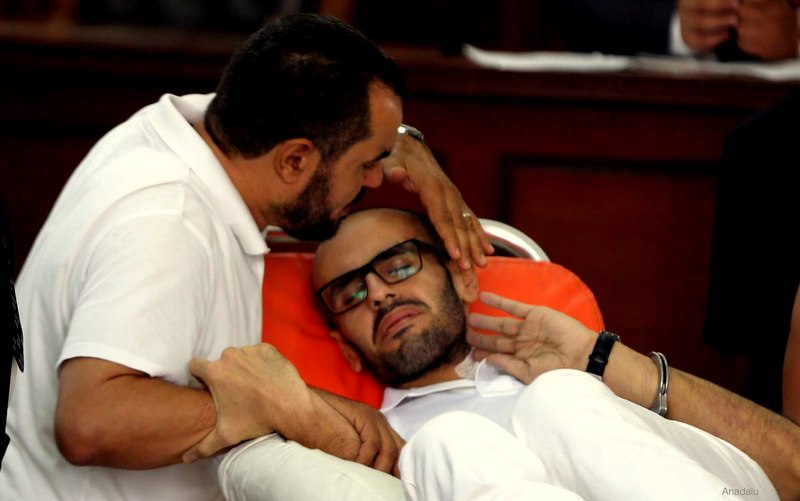
The Cairo Criminal Court in Egypt on Wednesday refused for the fourth time a request to release Egyptian-American Mohamed Soltan on the grounds that he has a debilitating health condition.
A dozen rights groups petitioned the court to place Soltan in a hospital outside of the prison to ensure his survival, as he is on a nearly year-long hunger strike and has a complicated medical history. Yet the court rejected this motion, saying that it was “a blatant intervention in judiciary work.”
The hearing, scheduled to commence on Wednesday, has been postponed until Nov. 16.
Soltan, who has been accused in the “Rabaa Operations Room” case, did not attend, though the judge has demanded his presence in the past, even if it meant that Soltan had to be wheeled in on a gurney. His absence in the court has led members of his family to suspect that he may be unconscious or in a coma.
Numerous reports emerged earlier this week that Soltan, 26, a graduate of the Ohio State University, had gone into a coma and was close to death.
He “slipped into unconsciousness,” Hanaa Soltan, Mohamed’s sister, told MintPress News.
“When his blood sugar levels dropped past a certain number he went into shock and started shaking uncontrollably, and then he was unconscious,” she explained.
Multiple physicians at the prison hospital in Cairo, where he is currently interned, concluded that Mohamed had suffered a hyperglycemic seizure followed by a diabetic coma, Hanaa asserted.
Revolutionary fervor
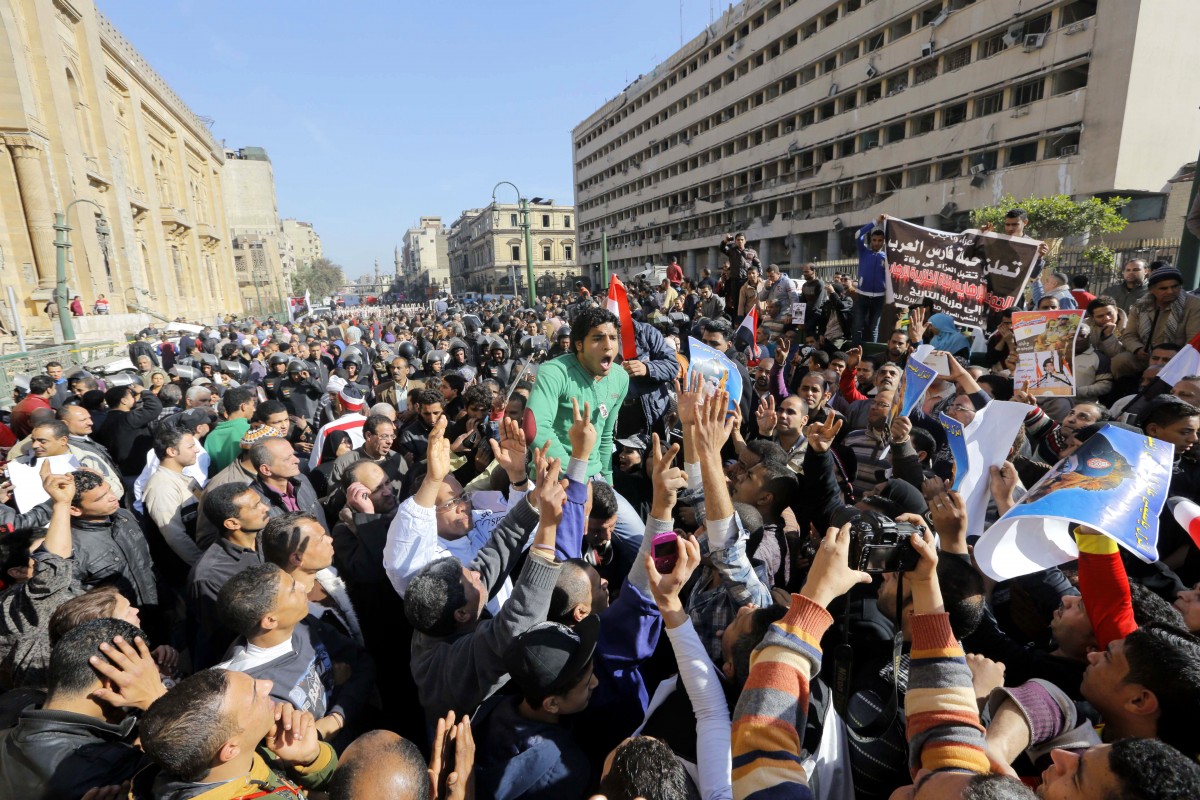
Mohamed Soltan is an American citizen who was imprisoned in Egypt in August 2013 following massive sit-ins throughout the country to protest the coup d’état by the Egyptian army. Gen. Abdel Fattah el-Sisi, Egypt’s current president, overthrew the Muslim Brotherhood government elected in 2012 and suspended the country’s constitution.
Since 2013 it is estimated that upwards of 41,000 people have been arrested for their participation in protests and demonstrations following the overthrow of Mohammed Morsi’s Muslim Brotherhood-led government.
Charges brought against Soltan allege that he was part of a conspiracy involving an “operations room” to defy the government. His father, Salah Soltan, has been arrested and charged in the same case, and it seems that his father was the government’s target.
“We thought they’re just going to keep Mohamed until they flesh my dad out,” said Hanaa Soltan, noting: “My dad is ex-government.”
Hanaa explained that her family believes Mohamed was only being held as bait to lure her father out of hiding and into jail.
One month after Mohamed’s arrest, Salah turned himself in to authorities. While Salah is a prominent Muslim Brotherhood figure, Mohamed did not actively identify as part of the organization. “He was not politically involved in anything. He had never been involved in any party and he had definitely not been involved in any way, shape or form in any government,” Hanaa said.
Mohamed, who was born in Egypt and grew up in the United States, returned to Egypt after graduating from university in 2012 because his mother, in Egypt, had been diagnosed with breast cancer that winter. His plan was to see her through radiation treatment and chemotherapy, according to his sister.
He found a job in Cairo and got swept up in the revolutionary fervor that had engulfed the nation from 2011. Then in 2013, counter-revolutionary forces hit back against the colossal changes taking place in the North African country.
“You see, before getting arrested I was documenting crimes against justice, against humanity, against democracy in Egypt, trying to share my American principles with young Egyptians,” Mohamed said in a video he made in prison that was posted on YouTube earlier this year.
Hanaa explained that because Mohamed is bilingual, he was helping foreign journalists in their coverage of the sit-ins. “Basically, at that point, I guess he was deemed an online activist because he would live-tweet pictures and stuff like that of the protesters,” she said.
Mohamed has had more than a few critical encounters with death during his imprisonment. His hunger strike is currently approaching 300 days. “There was a four-day stretch at one point, a seven-day stretch, depending on how long it took to get him back to non-critical condition,” said Hanaa.
This time there was a legitimate scare because prison authorities, according to Hanaa, said that he had gone into a coma. The U.S. Embassy in Egypt has since been in touch with the family and said that Mohamed is no longer in critical condition.
Hanaa no longer believes her brother is unconscious.
“A giant teddy bear”
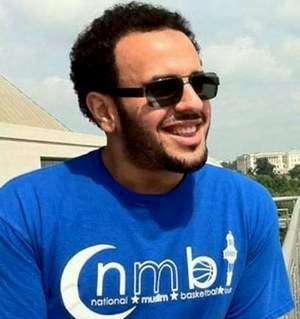
“He would do anything for his family and friends… He’s a giant teddy bear,” Hanaa said when asked what type of person her brother is.
She said that he’s “very helpful to others,” adding that, “all his friends from every corner of the world would say that they’ve never met a person that’s as giving or as generous or as loyal, like drop everything and come to a friend’s aid kind of person.”
Hanaa said that she wishes the military court would take into consideration Mohamed’s entire medical history while examining his case. “But I don’t think that I’m appealing to an authority that cares or values human life, in general,” she said.