

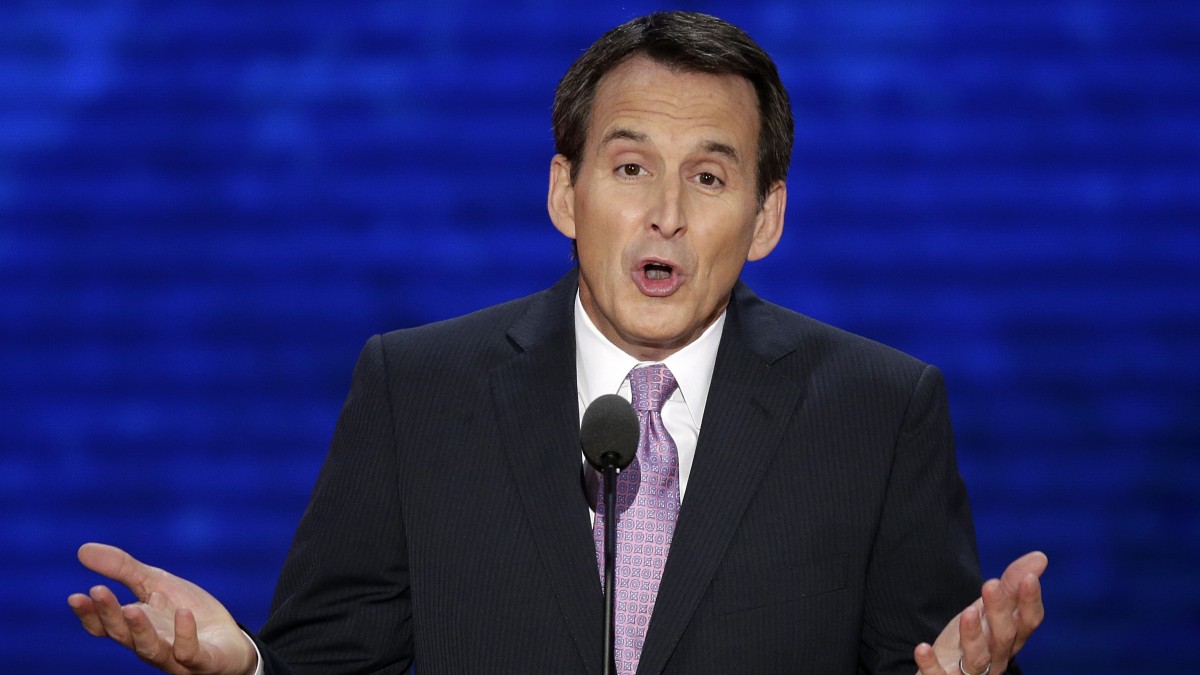

(Mint Press) – Like so many politicians before him, former Minnesota Gov. Tim Pawlenty is making the transition to the lobbying world, accepting a position as CEO of Financial Services Roundtable, known as one of the leading influential bodies representing big banks.
Pawlenty’s move into the big bank lobbying world may be surprising, considering his long held aspirations of becoming the Republican nominee for president, but in terms of career progression, lobbying is often the next step for those who have served office.
After all, former elected officials know their way around the ropes — when public service is said and done, their experience serves as a form of degree, allowing them to rake in the big bucks and take life a little easier. When their political careers dry up and they’re done serving the public, corporations have a new asset to add to the lineup.
“Tim’s leadership, vision and ability to find common ground make him the right choice to represent the broad membership of the Financial Services Roundtable,” Allstate CEO and Financial Services Board Chairman Tom Wilson said in a press release, reinforcing the notion that when elected officials leave the political game, they’re valuable to companies looking to get an inside edge among lawmakers.
As for Pawlenty, his move into the other side of politics is described as a progression within his career, one that steps away from serving the people and focuses on the companies that will now make up a new sort of constituent.
“My time in public service was rewarding and focused on achieving results. I am grateful to have had the opportunity to serve, but I am now moving on and committed to focusing fully on this new opportunity,” he said in a statement.
Pawlenty is leaving behind his position with the Romney campaign, putting his political aspirations aside.
Former politicians are clearly free to move onto new careers after the legislative life, but their entry into the lobbying system raises an ethical question: How does someone who had previously dedicated their life to public service turn the switch so fast, persuading former colleagues to act on behalf of their represented corporation, rather than the people?
So, who is a lobbyist?
Former Congressman Newt Gingrich serves as a prime example of political lobbying career progression. While running this year for the Republican presidential bid, Gingrich came under fire for work his consulting firm did for Freddie Mac, the bank at the forefront of the foreclosure and market collapse scandal.
While high profile names, Gingrich and Pawlenty are only two elected officials-turned lobbyists working the political system, accepting exorbitant salaries working on the other end of the political system.
As pointed out this year in the New York Times, the definition of a lobbyist is, well, vague. In order for a person to officially be allowed to carry such a title, which typically holds negative connotations, that individuals must meet three sets of criteria:
First, they have to make more than $3,000 lobbying in three months, which is a given for those in the business. In the lobbying world, that’s essentially a given, with plenty of professionals earning at least three-figure salaries pushing companies’ agendas with lawmakers.
Second, they have to hold more than one lobbying contract. So, if a person only represents one company or interest group, it seems they may lobby without the nasty title.
And third, the “lobbyist” must spend more than 20 percent of time working for one client over three months.
Gingrich, for example, didn’t make the cut, although he clearly was lobbying.
There are rules governing when a former elected official can enter the lobbying world, too. For those who have served as members of Congress, a one year gap must exist between the time they leave office and begin attempting to convince former colleagues to do them a favor. Politicians can, however, be hired as consultants straight off the bat.
Look who’s lobbying now
In March, Former Rhode Island House Speaker William Murphy, a Democrat, accepted a position as a lobbyist for Advance America, a questionable business known for its payday lending loans. Murphy serves as a prime example of what a state politician can do in the post-legislative world.
His salary for the new position? Each session he represented the company, he earned upward of $50,000 for working with one company. During that same time, he was also working for the prison guards’ union and for Grocery Manufacturers Association — all as a lobbyist.
In the grand scheme of things, Murphy’s role in the lobbying world was nothing. Former Appropriations Committee Chairman Bob Livingston, a Republican, earned more than $1 million in fees in his first year as a lobbyist — a not-so-uncommon salary for former U.S. congressional leaders who held influence among former colleagues.
According to the Center for Responsive Politics, 129 former elected officials were serving as lobbyists in 1999 — and the numbers were fairly even between Democrats and Republicans. By the early 2000s, that number had increased to just below 400, with plenty of former senators and representatives joining the lobbying world.
The list of those lobbying now, in total, includes 11,461 for 2012, according to the Center for Responsive Politics. The amount spent on lobbying this year? A whopping $1.66 billion. While that clearly includes more than former politicians, it shows how large and lucrative the business of lobbying can be. It also presents an ethical issue over the role lobbyists have on the decisions made by lawmakers.
Accountability
Current laws in place that allow former elected officials to register as lobbyists one year after service don’t offer much time for politicians to separate themselves from legislative life with former colleagues.
And while that’s an issue that might not change anytime soon, it’s worth it for members of the public to pay attention to who has become a lobbyist, and whether or not their elected officials are keeping in close contact with such people.
When the allegiance switches from constituents to former colleagues, the legislative system moves away from its intent — and with big money spent in the lobbying world, it’s clear cash talks, to some degree.
As the Center for Responsive Politics points out, the amount of money spent each year on lobbying is huge, reaching a high in 2010 at $3.55 billion. And many of the people within the lobbying world are working alongside politicians, some with lobbyists working in-house nationally. And, according to the organization dedicated to tracking to lobbyist spending, it makes a real difference in the way American politics function.
“Every year, Congress debates legislation that can have a tremendous impact on every sector of the American economy,” it states in a 2000 Center for Responsive Politics report. “With billions of dollars at stake, virtually every industry and interest group hires lobbyists to plead its case.”
It’s also worth watching to see whether politicians are serving the public for the right purposes or are only looking to build their resume to a point where they’re able to rake in three- to four-figure salaries, a standard among top registered lobbyists.