


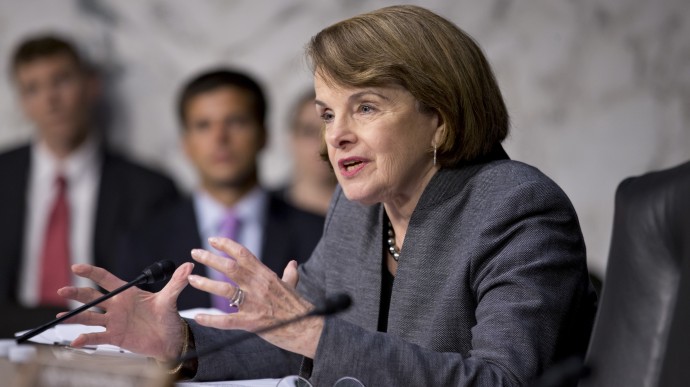
As the murkiest details of the torture program created and run by the Bush administration continues to be shielded from public review, the growing controversy over the clandestine and illegal use of techniques by the CIA has now taken center stage in a bureaucratic fight between the agency and the Senate Intelligence Committee charged with its oversight.
Given the secretive nature of the issue and parties involved, what has leaked out in reporting and public statements over the last several weeks gives only a vague sense of the fight between members of the committee, the Obama administration, and the CIA but most of it revolves around an investigative panel set up by the Senators on the committee to explore the torture program.
New reporting by the New York Times‘ Mark Mazzetti on Saturday, however, offers the fullest picture so far about how the senate investigators stumbled upon a previously unknown internal CIA review of the torture program and how in the aftermath of that discovery—which the CIA considered ‘unauthorized’—it set up a way to place the investigators themselves under surveillance.
Explosive charges surfaced earlier this week that President Obama, in fact, knew that the CIA had put the Senate investigators under watch but did nothing to stop it.
According to Mazzetti:
At the center of the dispute is the classified internal C.I.A. review of the detention and interrogation program, a review that Democratic senators believe buttresses the conclusion in the intelligence committee’s 6,300-page report that the program yielded little valuable intelligence.
The story of how the internal review became the focal point of an escalating fight is based on interviews with more than a dozen current and former government officials on both sides of the battle. Most of them declined to be identified because of the continuing investigations.
On the specifics of the Senate investigation and the memos reviewed, he explains:
Some people who have read the review memos said that parts of them were particularly scorching in their analysis of extreme interrogation methods like waterboarding, which the memos described as providing little intelligence of any value. The committee investigators set to work, spending hours each day in the windowless basement of a nondescript building that advertised itself as a C.I.A. office by the cluster of marked C.I.A. police cars guarding the front.
The room designated for the staff, called the “electronic reading room,” was a spartan office with tables and computers set against the walls and a large conference table in the middle.
Early in the investigation, thousands of files were loaded into the database, and the committee staff members pored over the material.
According to a recent court filing in a Freedom of Information Act lawsuit, the C.I.A. created a “network share drive” segregated from the main agency network, a provision intended to allow the committee to work in private.
Somewhere along the line, the investigators found something, however, they did not know existed: an internal reivew, now being called the “Panetta Review” because it was ordered by then CIA Chief Leon Panetta, appointed by Obama.
It is unclear how or when committee investigators obtained parts of the Panetta review. One official said that they had penetrated a firewall inside the C.I.A. computer system that had been set up to separate the committee’s work area from other agency digital files, but exactly what happened will not be known until the Justice Department completes its inquiry.
Several officials said that the C.I.A. never intended to give the internal memos to the Senate, partly under the justification that they were draft documents intended for the C.I.A. director and therefore protected under executive privilege authorities.
With the DOJ now investigating claims of misbehavior or breach of boundaries on both sides, the possible outcomes remain unclear.
One thing, however, worth noting that both the CIA and the Senate Intelligence Committee members agree on when it comes to how the U.S. government used torture and prolonged detention without charge as formal policy: the public has no right to know.
This article first appeared on Common Dreams.