
Behind claims of neutrality, the UAE has emerged as a key player in the war on Iran — providing surveillance, hosting operations, enabling strikes from its bases and aiding Israeli false flags while portraying itself as a victim on the world stage
“We are Iranian Jews and we are always ready to sacrifice our lives for our homeland,” Bihdad Mikhail, managing director of the Tehran Jewish Association, told MintPress News as he held back his tears while carrying Jewish religious books that were destroyed by Israeli airstrikes.
Since the end of World War Two, Washington has targeted medical centers in at least 16 countries and Israel destroyed nearly every medical facility in Gaza. The 307 Iranian sites hit does not even come close to the record for the number of hospitals in any country destroyed by American bombs and missiles.
Behind The Headlines – The F-15E rescue Iran operation, sold by the Trump administration as a ‘biblical’ triumph, stands exposed as one of the most costly and contradictory failures in modern military history. Not only did it set back the US taxpayer over $300 million dollars, Iran now claims that they foiled an attempt to […]
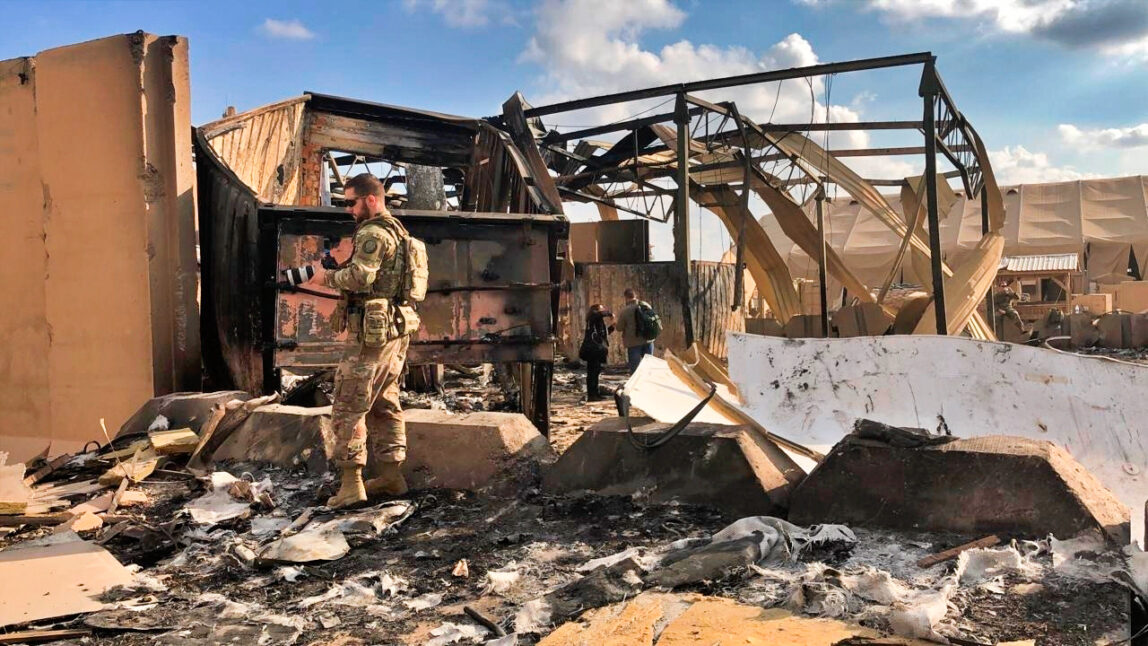
The U.S.–Israel war on Iran has reignited a long-simmering front in Iraq, where resistance groups like Kataeb Hezbollah and the Islamic Resistance in Iraq are launching coordinated drone and missile attacks on American targets, including Ain al-Assad airbase and facilities inside Baghdad’s Green Zone. What Washington once declared finished in 2003 is rapidly unraveling into a new phase of war — one defined by blowback, as battle-hardened Iraqi factions degrade U.S. defenses and push American forces out of Iraq.
For years, U.S. strategy has relied on the assumption that sanctions, economic pressure, and military force would weaken adversaries and trigger internal collapse. But as economist Michael Hudson has argued, that logic misunderstands how nations respond under existential threat. “This war will decide whether the U.S. controls the global oil trade — or whether the world becomes independent of it,” Hudson said, framing the conflict as a turning point in the global economic order.
A series of arson attacks and alleged incidents targeting alleged Jewish-linked sites across Europe have been attributed to a little-known group called Harakat Ashab al-Yamin al-Islamia (HAYI), or Ashab al-Yamin allegedly linked to the IRGC. At the same time, governments across Europe and the UK are moving to formally designate the IRGC as a terrorist organization — a policy long pushed by pro-war, pro-Israel lobbying networks. Many of the same actors amplifying the HAYI narrative are also leading that campaign within Western media to manufacture consent for war and accelerate this political objective of proscription. While raising the possibility that unverified claims of an Iran-linked threat are being leveraged to shape public fear and justify sweeping new security measures tied to the widening war. This investigation examines each reported attack, the sources promoting the HAYI narrative, and how claims of a coordinated campaign may be shaping public perception — fueling fears of rising antisemitism, calls for expanded security measures and proscribing the IRGC as a terrorist organisation amid an illegal war.