

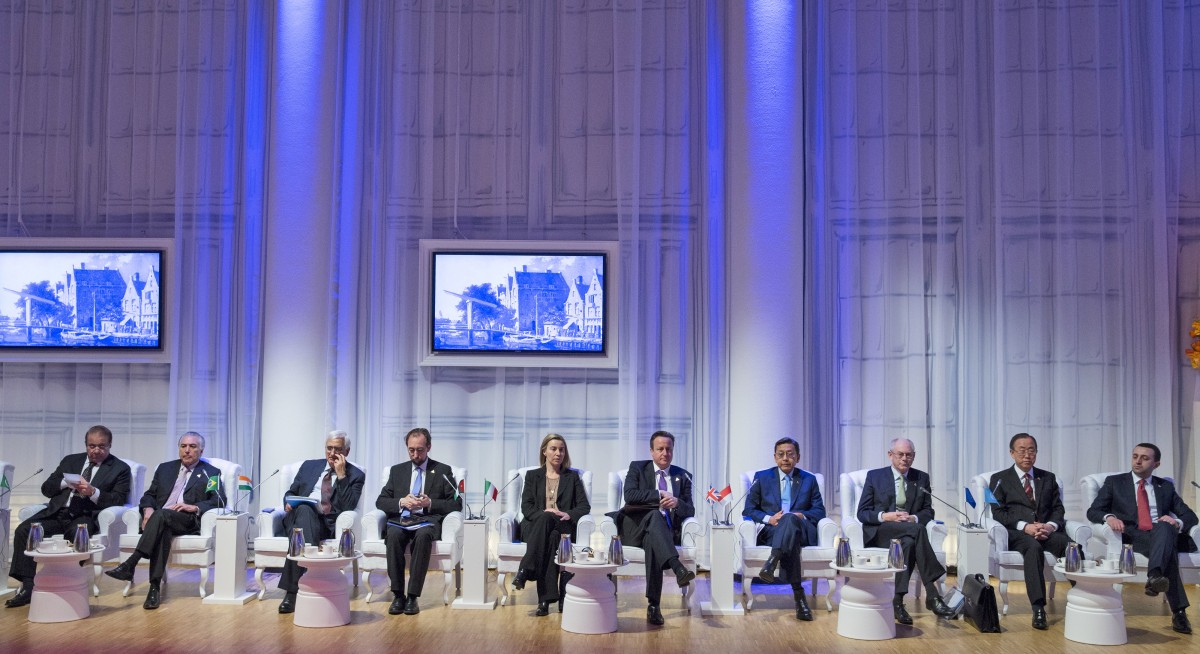
THE HAGUE, Netherlands (AP) — A total of 35 countries have pledged to turn international guidelines on nuclear security into national laws, a move aimed at preventing terrorists from getting their hands on nuclear material.
Tuesday’s initiative also commits countries to open up their security procedures to independent review, marking a further step toward creating an international legal framework to thwart nuclear terrorism, the Netherlands, the United States and South Korea said in a joint statement.
The agreement, accepted by 35 of the 53 nations taking part in a Nuclear Security Summit in The Hague, was hailed by experts as the meeting’s most significant achievement.
U.S. Energy Secretary Ernest Moniz said the guidelines agreed to are “the closest things we have to international standards for nuclear security.”
But experts attending the summit cautioned that other nations now also need to join the initiative.
“We need to get the rest of the summit members to sign up to it, especially Russia, and we need to find a way to make this into permanent international law,” said Miles Pomper of the James Martin Center for Nonproliferation Studies.
Over the course of three summits since President Barack Obama launched the series in 2010, the countries that have enough material to build a nuclear weapon have fallen from 39 to 25.
This summit featured new reduction commitments, with Japan, Italy and Belgium pledging to reduce their stocks of highly enriched uranium and plutonium.
Other groups of nations have pledged to increase efforts to combat illicit trafficking in nuclear material, boost maritime security and to develop low-enriched uranium for research reactors instead of the highly enriched, weapons-grade nuclear fuel currently widely used.
The pledges complement commitments that leaders will outline in a closing statement later Tuesday.
Michelle Cann of the Partnership for Global Security said Tuesday’s deal was significant because it marks “a change in the way security is done.”
Cann said the gains from reducing nuclear material would likely trail off in the future and the most important thing remaining to improve security is for groups of like-minded countries to lead the way.
Because of the difficulty of getting countries to agree to an international treaty, creating a package of “best practices” and goals for countries to achieve should create peer pressure among nations, with none wanting to be seen as the most lax at safeguarding their nuclear material.
Among countries agreeing to the initiative were France, Britain, Canada and Israel. Notably absent are Russia, China, India and Pakistan.
“We’ve had these countries participating in this process for six years, and now we only have two-thirds of them willing to say ‘yes, I’m going to fully implement the International Atomic Energy Agency’s fundamental recommendations on how to safeguard this material,'” Cann said.