

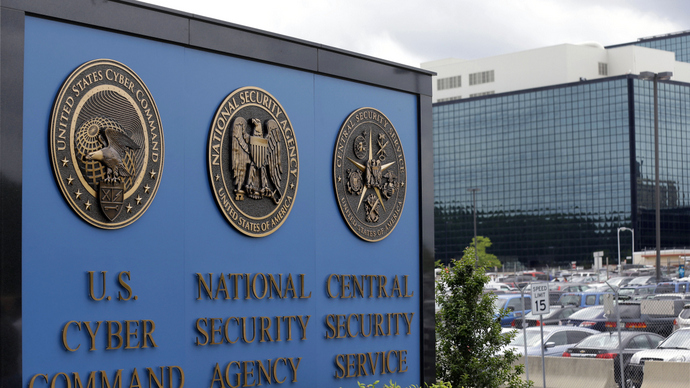
A government panel tasked to examine how a controversial program of the National Security Agency is executed has determined the Section 702 program has been “effective” in improving aspects of “national security,” but that the manner in which it performs its unwarranted and bulk collection of telephone and digital communications place it on the very edge of “constitutional unreasonableness.”
The draft report is informative but flawed, say critics of its methods and finding, in that it takes too many of the government’s own questionable claims and legal assumptions as it starting point, without a deeper and more adversarial examination of how the bulk data being collected by the agency is being gathered in the first place.
The draft report (pdf) from the Privacy and Civil Liberties Oversight Board (PCLOB) was released to journalists and the public late on Tuesday with a meeting of the board and approval of the final draft scheduled for Wednesday. The PCLOB is an independent oversight agency of the government which has reviewed previous surveillance programs of the NSA following revelations made possible by the leaks by whistleblower Edward Snowden last year.
In its review, the panel looked at the NSA’s PRISM program, which operates under the authority of Section 702 of the Foreign Intelligence Surveillance Act (“FISA”) (pdf), by which the government collects the contents of electronic communications, including telephone calls and emails. Targets under the program are restricted by law to targets that are “reasonably believed to be non-U.S. persons located outside the United States,” but privacy advocates and civil liberties groups have argued that government agencies, including the FBI and CIA, have stretched that interpretation well beyond what the law intended.
According to Cindy Cohn, legal director at the Electronic Frontier Foundation, the PCLOB falls well short of what is required in terms of oversight and holding the NSA and other government agencies accountable. “The board focuses only on the government’s methods for searching and filtering out unwanted information,” she notes in a blog post on the group’s website. “This ignores the fact that the government is collecting and searching through the content of millions of emails, social networking posts, and other Internet communications, steps that occur before the PCLOB analysis starts.
Other initial reviews of the report called its findings a vindication of the NSA’s claims that the PRISM program and use of Section 702 have been useful and “legal” tools in the effort to distrupt terrorist networks or national security threats around the globe.
As the Guardian‘s Spencer Ackerman reports, the PCLOB assessment “dealt the NSA a victory on Tuesday night by calling the information reaped ‘valuable’. It pointedly rejected similar claims for the bulk collection of US call data in a January report.”
However, Ackerman continued, the board also questioned “the NSA’s intrusion into Americans’ data and recommended limits to the government’s ability to access large amounts of American communications data that the NSA inevitably collects and searches through without a warrant.”
As Reuters notes, certain aspects of the manner in which the NSA interprets the law and executes the PRISM program raise serious questions about whether its impact on U.S. persons pushes it over the edge into “constitutional unreasonableness.”
Government disclosures made public earlier this week from the Office of the Director of National Intelligence made it clear that both the FBI and CIA exploit the NSA’s “trove” of data collected under Section 703 to conduct what Sen. Ron Wyden (D-Oregon) has called “backdoor searches” —done without a warrant—on untold numbers of U.S. citizens.
As Cohn writes:
PCLOB findings rely heavily on the existence of government procedures. But, as Chief Justice Roberts recently noted: “the Founders did not fight a revolution to gain the right to government agency protocols.” Justice Roberts’ thoughts are on point when it comes to NSA spying—mass collection is a general warrant that cannot be cured by government’s procedures.
The PCLOB’s proposed reforms for Section 702 are an anemic set of recommendations that will do little to stop excessive surveillance. For example, rather than rein in government communications searches, the PCLOB simply asks the NSA to study the issue.
The PCLOB report provides the public with much needed information about how the 702 program works. But the legal analysis is incorrect and the report fails to offer effective reforms. The government’s collection and search of Americans’ communications without a warrant or individually approved court order is barred by the Constitution and must be stopped. We look forward to continuing such arguments in Jewel v. NSA, our ongoing case against the NSA’s mass spying programs.
__________________________________